
The short answer
If your system blows cool air in heat mode, trips breakers, smells like burning, or won't turn on, it needs a heating repair. We diagnose the whole system first, explain what failed and what it costs to fix, and help you decide whether repair or replacement makes more sense for your home.
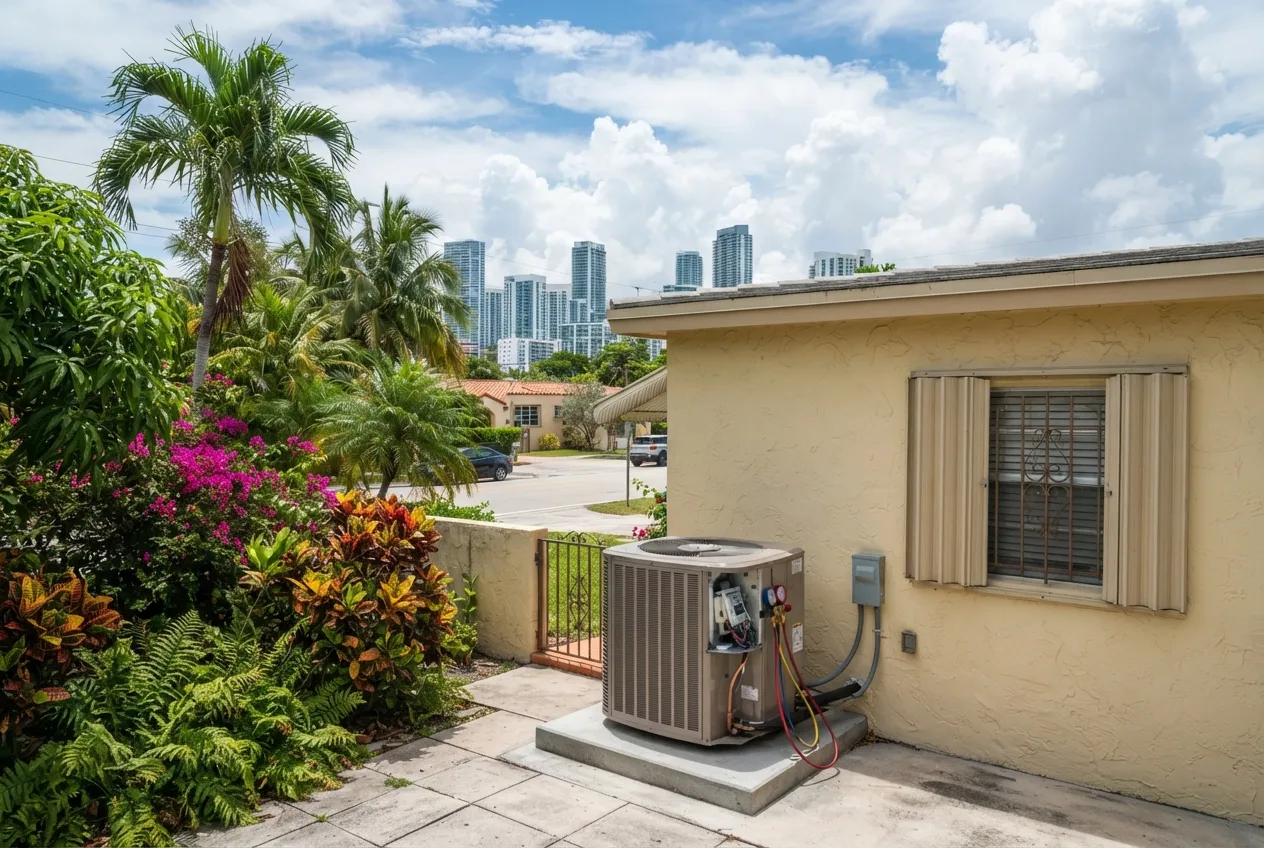
Miami doesn't need heat often, but when a cold front moves through in December or January, you want your system to work. Most homes here rely on a heat pump that handles both heating and cooling, often with electric backup heat strips in the indoor air handler. Some homes have a gas furnace. Because these systems sit unused as heaters for most of the year, problems tend to show up the first chilly night you switch over. AirVantage Heating & Cooling repairs heating systems in Miami and nearby cities. This page covers what to watch for, what we check, and how to decide between repair and replacement.
Signs Your Heating System Needs Repair
The first time you switch to heat each season is the best time to catch trouble. Try running the system for a few minutes on a mild day before you actually need it. Notice what you hear and smell, and check how the air feels at the vents. Schedule a repair if you notice any of the following:
If you smell gas, leave the home right away and call your gas utility's emergency line from outside before contacting anyone else.
- The air from the vents feels cool or lukewarm after the system has run for several minutes.
- The outdoor unit of your heat pump runs, but the house never warms up.
- A burning smell lasts more than a few minutes. A brief dusty odor at the first startup of the season is normal. A smell that doesn't go away is not.
- Breakers trip when heat or emergency heat comes on.
- The system turns on and off in short bursts, or won't turn on at all.
- You hear grinding, rattling, squealing, or loud clicking from the air handler or outdoor unit.
- Ice stays on the outdoor coil instead of clearing during the defrost cycle.
- The thermostat shows auxiliary or emergency heat running almost constantly.
- On a gas furnace, the burner flame is yellow or flickering, the pilot won't stay lit, or there is soot near the unit.
What We Check During a Heating Repair
A heating repair visit starts with a diagnosis. We test the whole system instead of replacing the first part that looks worn. A symptom like weak heat can come from several different places, and fixing the wrong one just means another visit.
Humidity and salt air are hard on HVAC equipment in South Florida. During the wet season, from May through October, moisture and frequent afternoon thunderstorms can corrode outdoor coils and electrical contacts. Power surges can also damage control boards. We look for this kind of wear because it often explains a heating failure that seems to come out of nowhere.
- Thermostat settings and wiring, and whether the thermostat is calling for the right stage of heat
- Electric heat strips, sequencers, and limit switches in the air handler
- Reversing valve, defrost controls, and temperature sensors on heat pumps
- Capacitors, contactors, and fan motors
- Refrigerant pressures and signs of leaks, since a heat pump low on refrigerant heats poorly
- Breakers, fuses, and electrical connections, checking for loose or burned terminals
- Air filter, blower, and airflow through the ductwork
- On gas furnaces, the igniter, flame sensor, burners, gas pressure, venting, and the heat exchanger for cracks
Repair or Replace: How to Decide
Most heating problems can be repaired. A failed capacitor, a burned-out heat strip, a stuck reversing valve, or a dirty flame sensor can usually be fixed in a single visit or as soon as the part arrives. Replacement starts to make sense when a major component fails on an older system, or when the same system keeps needing repairs.
Because a heat pump heats and cools with the same equipment, a heating problem in Miami is often a whole-system decision. A compressor failure, for example, affects your air conditioning too, and air conditioning runs for most of the year here. We'll explain both options and the trade-offs so you can make the call. Replacement may be worth considering when:
If you do replace, Florida Power & Light offers rebates on qualifying high-efficiency central air conditioners and heat pumps through its Residential HVAC program. These rebates are delivered through participating contractors at the time of installation, and the terms can change, so we confirm the current details before including them in any quote. The federal Energy Efficient Home Improvement Credit no longer applies to new installations. It only covered qualifying heat pumps placed in service before December 31, 2025.
- The compressor or outdoor coil has failed on an aging system
- The system uses an older refrigerant that is harder to service
- You've needed several repairs over the past couple of years
- Your energy bills have gone up without any change in how you use the system
- Some rooms stay uncomfortable or humid even when the system runs
What Affects the Cost of a Heating Repair
We don't quote a price until we know what's wrong. These factors shape what a heating repair costs:
Before any work starts, we'll explain the problem and what it will cost to fix. Nothing moves forward until you approve it.
- Which part failed, and whether it's a common part or one specific to your system's manufacturer
- Whether the part is in stock locally or has to be ordered
- The type of system: heat pump, electric air handler, or gas furnace
- How easy the equipment is to reach, such as a tight closet, attic, or rooftop unit
- Whether refrigerant work or leak repair is needed
- After-hours or weekend service, if you need it
- Related damage, such as corrosion or a control board that failed after a power surge
How a Heating Repair Visit Works
When you contact us, we'll ask what you're noticing, when it started, and what type of system you have if you know. That helps the technician bring the right parts.
At your home, the technician will start by asking you about the problem. Then they'll test the system from the thermostat to the outdoor unit or furnace. Once they find the cause, they'll tell you what failed, why it failed, and what your options are, including whether repair or replacement makes more sense.
If you approve the repair, we complete it, run the system through a full heating cycle, and confirm that warm air is reaching the vents. We'll also point out anything to keep an eye on, like a filter that needs changing or a coil showing early corrosion.
Hurricane season runs from June 1 to November 30. If a storm causes power outages or flooding near your outdoor unit, it's a good idea to have the system checked, even if you won't need heat for months.
Heating Repair by city
- Heating Repair in West Miami
- Heating Repair in Miami Springs
- Heating Repair in South Miami
- Heating Repair in Miami Beach
- Heating Repair in Coral Gables
- Heating Repair in North Bay Village
- Heating Repair in Hialeah
- Heating Repair in Doral
- Heating Repair in Opa-locka
- Heating Repair in Sweetwater
- Heating Repair in North Miami
- Heating Repair in Medley