
The short answer
If your heat blows cool air, trips a breaker, smells like burning or won't turn on, your furnace, heat strips or heat pump likely needs repair. AirVantage Heating & Cooling diagnoses the cause, explains your repair or replacement options, and fixes the problem once you approve the work.
Most Miami homes don't have a traditional gas furnace. Heat usually comes from a heat pump running in reverse or from electric heat strips inside the air handler, and some older homes and condos still have a small gas or electric furnace. Whatever you have, it may sit unused for months and then get called on during a cold snap between November and April. That long idle stretch, plus year-round humidity, is hard on heating parts. AirVantage Heating & Cooling diagnoses and repairs all of these systems so your home warms up when you actually need it.
Signs Your Heating System Needs Repair
Because heat gets used so rarely here, problems often stay hidden until the first chilly night. Run your heat briefly in the fall so you find issues before you need warmth. Call for service if you notice any of the following:
A smell of gas or a carbon monoxide alarm is an emergency. Get everyone outside first, then call 911 or your gas utility before calling us.
- A burning or dusty smell that doesn't fade after the first several minutes of running (a little dust burn-off at first startup is normal)
- Air from the vents stays cool or lukewarm with the thermostat set to heat
- The breaker trips when the heat turns on, often a sign of a failing heat strip or wiring problem
- A heat pump that blows cold air in heat mode or never switches out of cooling
- Short cycling, where the system starts and stops every few minutes
- Banging, buzzing, grinding or rattling from the air handler or outdoor unit
- On gas furnaces, a yellow or flickering flame, an igniter or pilot that won't light, or soot near the unit
- Heating bills that jump without any change in how you use the system
What We Check During a Furnace Repair Visit
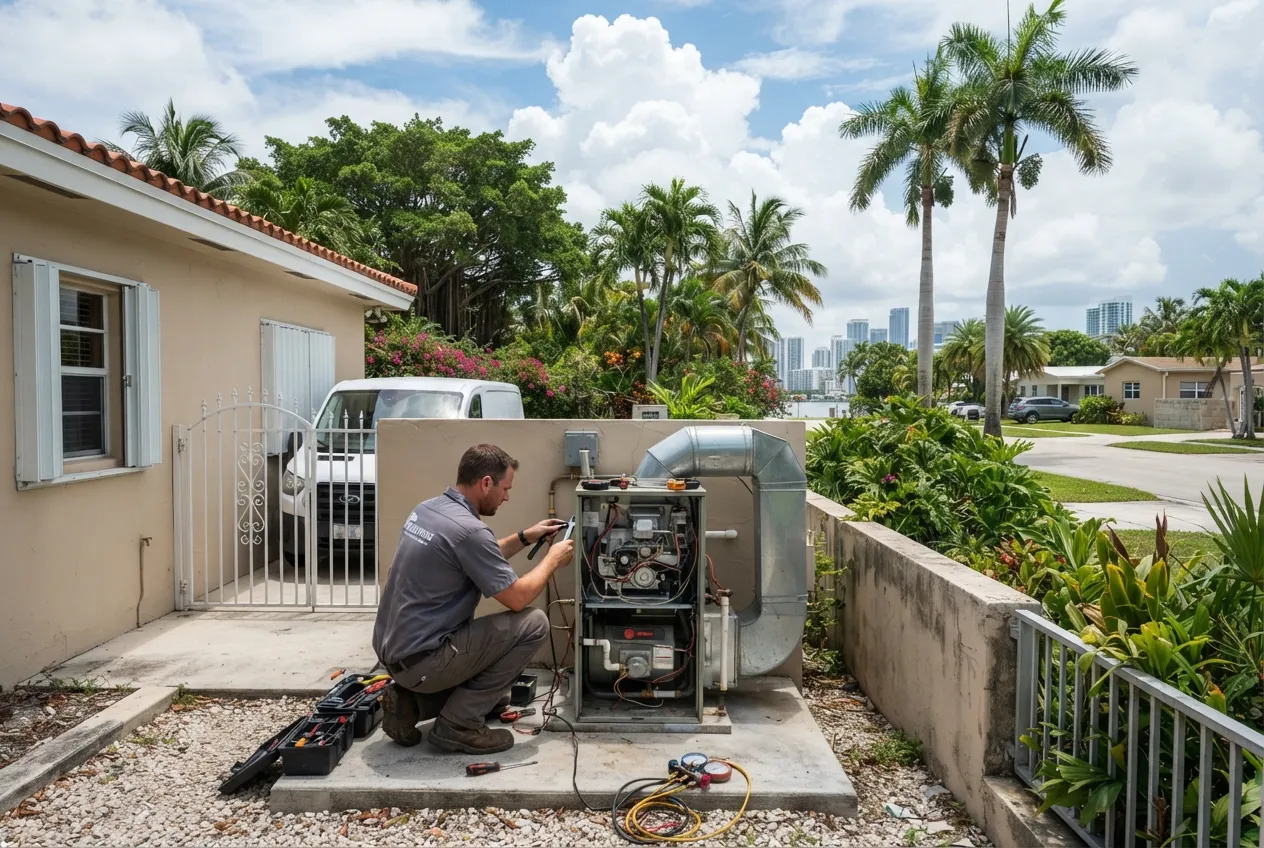
Our technicians start with the problem you describe, then work through the whole heating path instead of replacing the first part that looks worn. Depending on your equipment, that includes:
When we find the cause, we explain it in plain terms, show you the failed part when we can, and give you options before any work starts.
- Thermostat settings, wiring and batteries, including whether it's set up correctly for a heat pump with auxiliary heat
- Electric heat strips, sequencers, limit switches and the breakers that feed them
- Heat pump reversing valve, defrost controls, capacitors and refrigerant pressures
- Gas burners, igniter or pilot, flame sensor, gas valve and inducer motor
- Heat exchanger condition and venting on gas furnaces, plus a carbon monoxide check
- Blower motor and blower wheel, which humid air can coat with dust and mold
- Air filter, return air path and supply ducts for blockages or disconnected sections
- Condensate drain and safety float switch, which can shut the whole system down when clogged
Repair or Replace?
Most heating problems are fixable. A failed capacitor, a bad sequencer, a dirty flame sensor or a burned-out heat strip element is usually a straightforward repair. Replacement makes more sense when the system has bigger problems, or when the heating issue is one symptom of an aging system overall.
In many Miami homes, the same equipment that heats also cools, so the decision often depends on the air conditioner as much as the heater. We'll walk through questions like these with you:
If replacement is on the table, Florida Power & Light offers rebates on qualifying high-efficiency central air conditioners and heat pumps, delivered through participating contractors at the time of installation. Program terms can change, so we confirm the current details before including them in a quote. The federal tax credit for qualifying heat pumps applied only to systems placed in service before December 31, 2025, so it isn't available for new installations now.
- How old is the system, and has it needed several repairs recently?
- Is there a cracked heat exchanger on a gas furnace? That's a safety issue, and replacement is usually the safer choice.
- Does the heat pump use an older refrigerant that's harder to service?
- Is the system also struggling to keep up with cooling in summer?
- Would one high-efficiency heat pump sensibly replace both an old AC and a rarely used furnace?
What Affects the Cost of Furnace Repair
We can't give an accurate figure until we see the problem, but these factors shape what a repair involves:
Before any work begins, we explain the recommended repair and what it will cost, and you decide whether to go ahead.
- Type of system: gas furnace, electric furnace, heat strips or heat pump
- Which part failed, and whether it's a common part or brand-specific
- Part availability, especially for older or discontinued models
- Access to the equipment, such as a tight closet, attic or rooftop location
- Whether one failure caused others, like a clogged drain that damaged controls
- Refrigerant work on heat pumps, which takes more time and materials
- Timing, including visits outside regular hours
How a Furnace Repair Visit Works
Here's what to expect from your first call to a finished repair:
The Atlantic hurricane season runs from June 1 to November 30, and storms, power surges and high water can damage outdoor units and electrical parts in ways you won't notice until you switch on the heat. If your area lost power or flooded this year, a fall heating check is a smart step.
- Schedule: Tell us what you're noticing, what kind of system you have if you know, and where the equipment is located.
- Arrival: Your technician asks a few questions and checks the thermostat before opening the equipment.
- Diagnosis: We test the heating system, find the cause and check related safety components.
- Options: We explain what we found, the repair we recommend and any alternatives, including replacement if it makes sense.
- Repair: With your approval, we make the repair, often during the same visit when the part is on hand.
- Testing: We run a full heating cycle, plus a cooling cycle on heat pumps, to confirm everything works.
- Wrap-up: We clean the work area and share tips to keep the system ready for the next cold snap.
Furnace Repair by city
- Furnace Repair in West Miami
- Furnace Repair in Miami Springs
- Furnace Repair in South Miami
- Furnace Repair in Miami Beach
- Furnace Repair in Coral Gables
- Furnace Repair in North Bay Village
- Furnace Repair in Hialeah
- Furnace Repair in Doral
- Furnace Repair in Opa-locka
- Furnace Repair in Sweetwater
- Furnace Repair in North Miami
- Furnace Repair in Medley